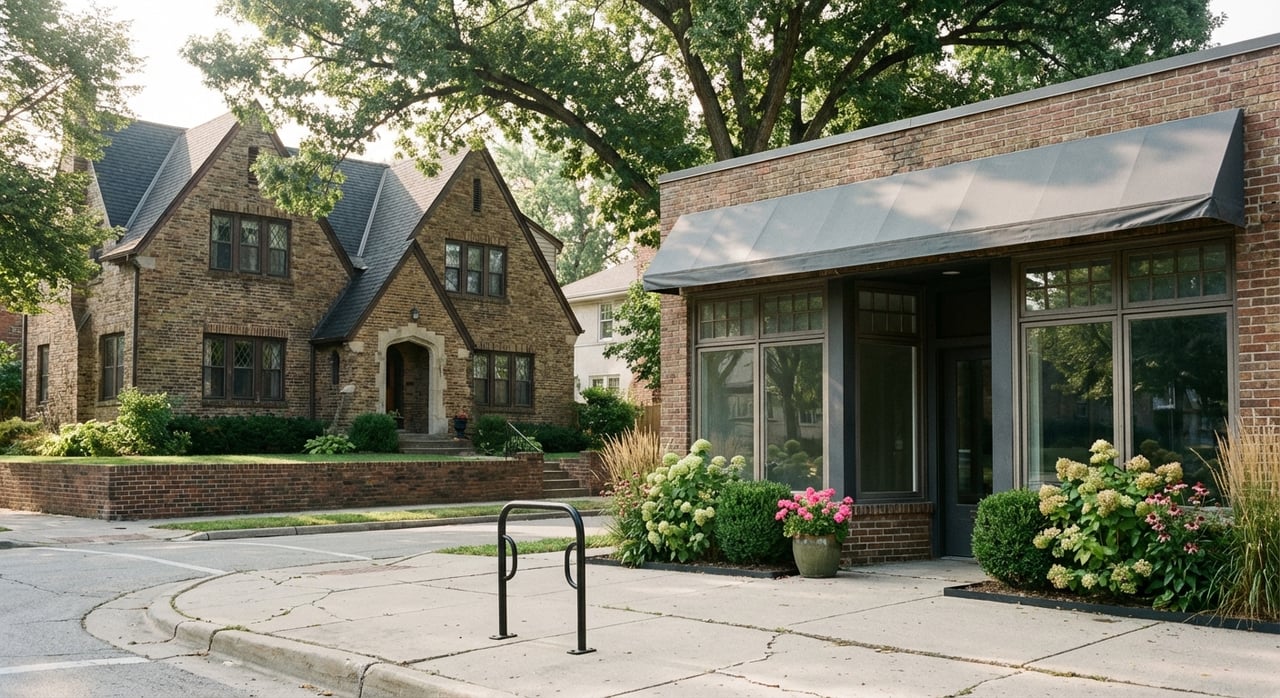
Looking for that small-town feeling without giving up city convenience? In Dundee, you get tree-lined blocks, a true main street, and neighbors who treat the area like a shared front porch. If you want a place where daily life feels easy on foot and rich with local character, this guide breaks down why Dundee reads like Omaha’s village in the city. You’ll learn what creates the vibe, how the neighborhood is cared for, and what to know if you plan to buy and renovate here. Let’s dive in.
What makes Dundee feel like a village
Historic roots that set the tone
Dundee began as a late 19th-century streetcar suburb and was annexed by Omaha in 1915, which shaped its compact blocks, setbacks, and cohesive streetscapes. The area is listed on the National Register of Historic Places as the Dundee–Happy Hollow Historic District, a recognition that captures the neighborhood’s enduring character and design. Early developers reportedly planted thousands of maples to create leafy avenues, an intentional placemaking move that still influences the look and feel of the streets today. You can read more about the district’s history on the official listing summary for the Dundee–Happy Hollow Historic District.
Human-scale streets and period homes
You notice Dundee’s “village” quality the moment you walk its blocks. Houses sit close enough for friendly waves, many with welcoming porches and preserved period details. Architectural styles from the early 20th century, including Tudor Revival and Colonial or Georgian Revival, appear alongside bungalows and brick cottages. The result is a consistent, walkable fabric that reads as a lived-in neighborhood rather than a large, uniform subdivision. The historic district’s documentation highlights these architectural patterns and their contribution to place identity on the Dundee–Happy Hollow Historic District page.
Streetscape care that invites you out
Small touches matter in Dundee. Mature trees shade sidewalks, cast-iron streetlights add evening charm, and seasonal flowers brighten key corners. Neighborhood stewards help organize plantings and public-realm improvements, reinforcing that the streets are social spaces, not just traffic corridors. For a deeper view of local care and history, visit the Dundee–Memorial Park Association overview.
A walkable main street at 50th & Underwood
Everyday errands on foot
Underwood Avenue around 50th is widely considered Dundee’s heart. Here you find a compact stretch of shops and eateries that make it easy to grab coffee, pick up a treat, or meet a friend without starting the car. The short blocks, active storefronts, and consistent sidewalks create the kind of main-street rhythm you expect in a small town. Learn more about the district’s core on the Dundee–Happy Hollow Historic District page.
Merchants who invest in place
Dundee’s business and neighborhood groups treat the commercial strip like a shared community room. Recent landscaping and street node projects improve the pedestrian experience and keep the corridor inviting year-round. This kind of upkeep supports foot traffic, casual gatherings, and local events that make the area feel alive. You can see a snapshot of that work in the DMA street node landscaping project update from the neighborhood association.
Green spaces that feel like a commons
Big parks within a short walk
Two of Omaha’s signature parks sit on Dundee’s edges, extending the neighborhood’s public life into wide-open green space. Memorial Park and Elmwood Park offer lawns, trails, and places to unwind, meeting the need for a “village commons” without leaving central Omaha. For context on park proximity within the historic district, see the Dundee–Happy Hollow Historic District summary.
Gardens and pocket places
Closer to home, Dundee’s community garden and small green nodes create everyday touchpoints with nature. These spaces bring neighbors together and encourage casual interactions that keep the social fabric strong. The Dundee–Memorial Park Association overview highlights these local features and the volunteers who help maintain them.
The Dundee lifestyle: Who it fits
Dundee tends to attract people who prefer a walkable routine and a clear sense of place. If you like strolling to coffee, saying hello from a front porch, and having parks nearby for quick resets, you will likely feel at home here. The neighborhood’s central location also appeals to those who want city access while keeping a calm, residential base. Rather than a collection of isolated subdivisions, Dundee offers a continuous neighborhood experience where errands and social life blend naturally.
Renovating and owning a historic home
Dundee’s National Register listing is primarily honorary and focuses on documentation. In many cases, it does not by itself regulate private renovations. Local conservation or enhancement districts may add design guidance or review processes depending on exact location and project scope. If you are planning updates, confirm details with the City of Omaha and the neighborhood association, and start with the historic district overview to understand how the area’s character has been defined.
How Dundee compares to a typical suburb
- Walk-first feel: Short blocks, continuous sidewalks, and a compact main street encourage trips on foot for small errands.
- Cohesive architecture: Period homes and consistent setbacks create a traditional neighborhood pattern instead of a series of isolated cul-de-sacs.
- Shared stewardship: Merchant and neighborhood groups partner on streetscape and public-realm improvements, keeping the area active and welcoming.
- Park access: With two major parks at the edges and smaller green spaces within, outdoor time fits easily into daily life.
Tips for exploring Dundee
- Start at Underwood and 50th to feel the neighborhood’s main-street energy in a few blocks.
- Walk toward Memorial Park or Elmwood Park to see how big green spaces connect to residential streets.
- Slow down on side streets to notice historic details, porch culture, and mature trees.
- Look for cast-iron streetlights and seasonal plantings that add to the evening ambiance.
- Check the neighborhood calendar for community events like Dundee Day via the Dundee–Memorial Park Association.
Ready to make a move?
If Dundee’s small-town-in-the-city rhythm sounds like your kind of everyday life, let’s talk about next steps. You will get practical guidance on home search strategy, timing, and what to consider if you plan updates in a historic district context. For a warm, one-on-one experience backed by full-service resources, reach out to Sheila Ost. We will make a clear plan and move at your pace.
FAQs
Is Dundee part of Omaha and how did it start?
- Yes. Dundee began as a streetcar suburb in the late 1800s and was annexed by the City of Omaha in 1915, later recognized as the Dundee–Happy Hollow Historic District on the National Register of Historic Places. See the district overview.
Is Dundee walkable for daily errands and dining?
- Yes. Underwood Avenue near 50th concentrates shops and eateries within a few short blocks, supported by sidewalks and pedestrian-friendly streets. Learn more in the historic district summary.
What parks are near Dundee for outdoor time?
- Memorial Park and Elmwood Park sit at or near Dundee’s edges, offering trails, lawns, and open space that function like a shared commons for the neighborhood. See the district overview.
Does Dundee’s historic status limit home renovations?
- The National Register listing is primarily honorary; local conservation or enhancement districts may add design guidance or review. Confirm with the City of Omaha and consult the historic district overview for context.
Are there neighborhood events in Dundee?
- Yes. Events such as Dundee Day and other gatherings are coordinated by local groups; check the Dundee–Memorial Park Association overview for current details.