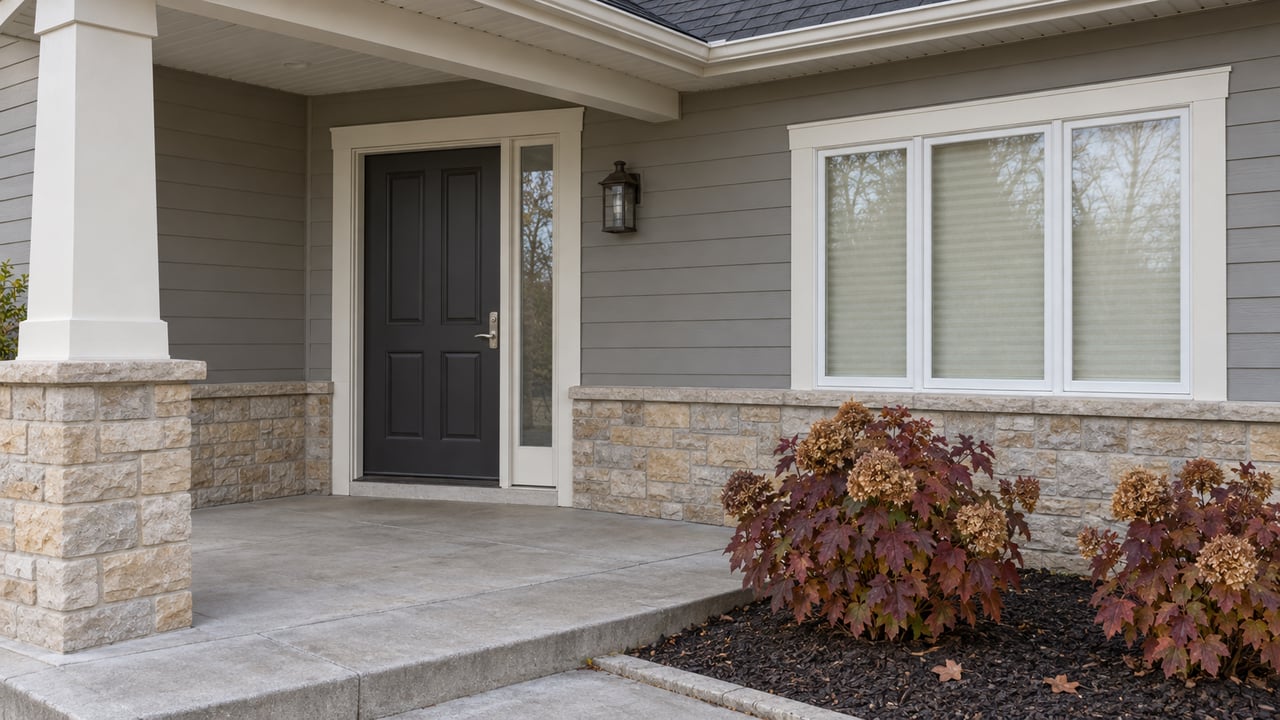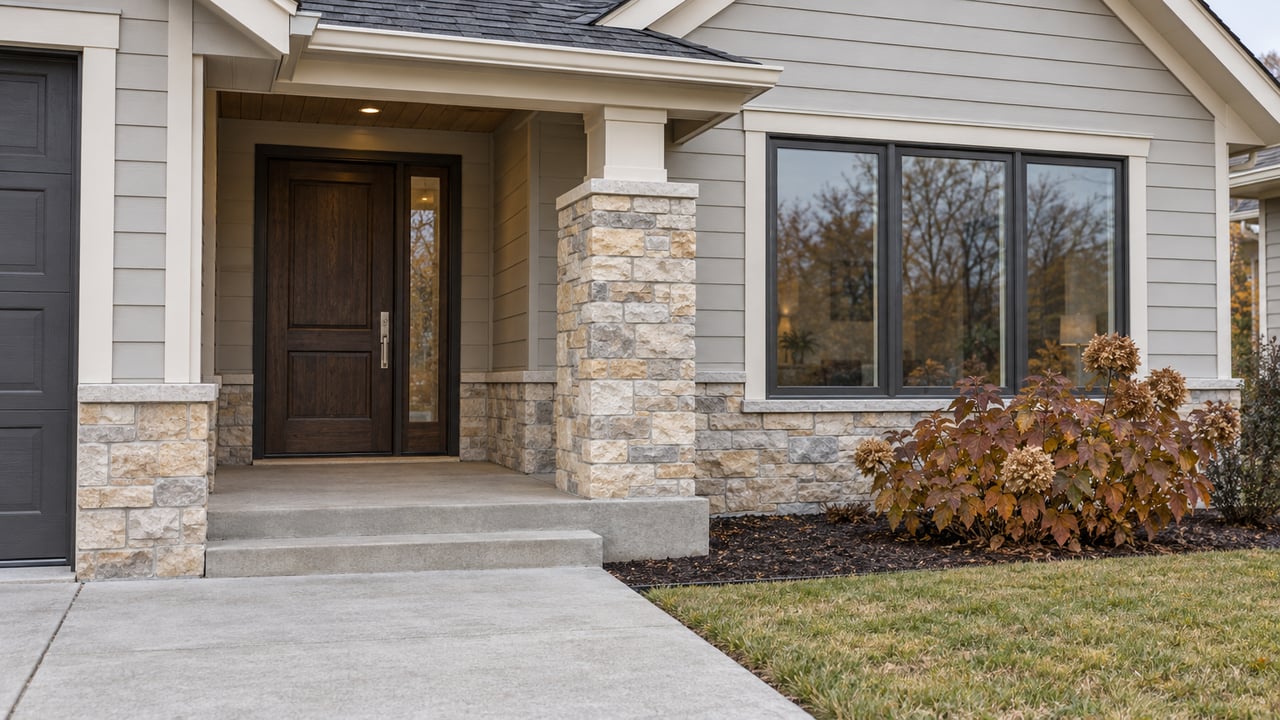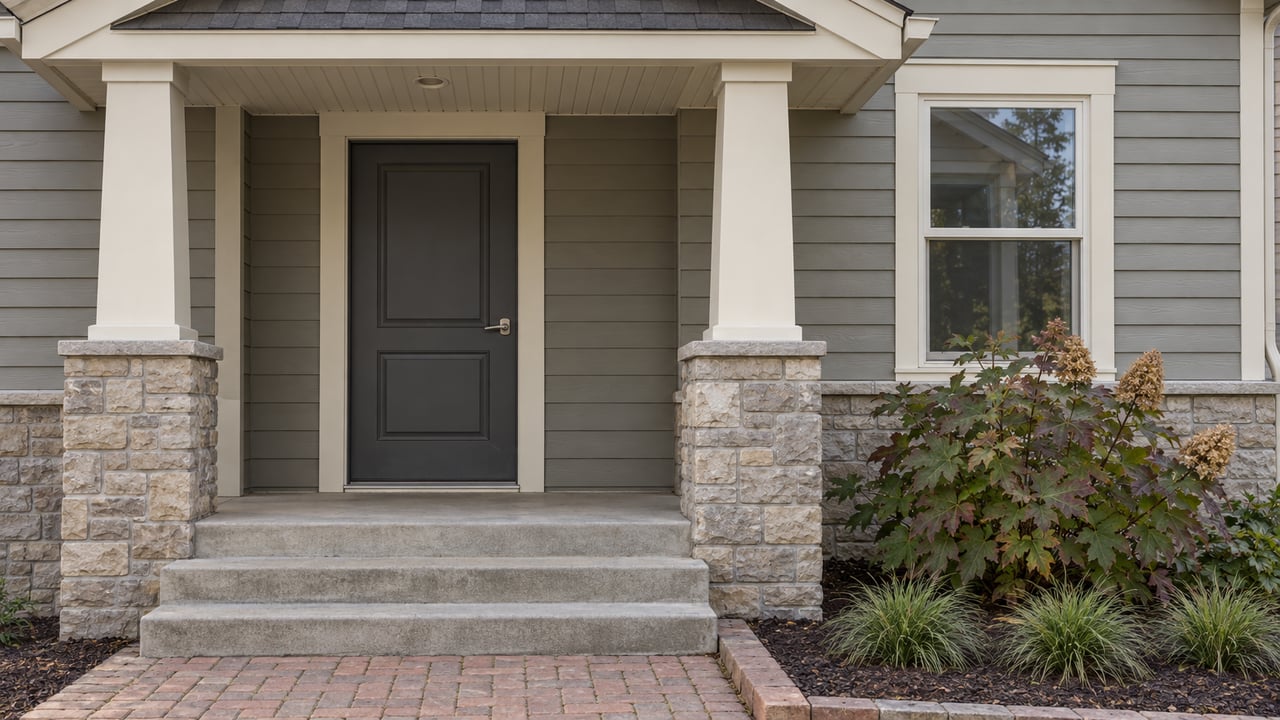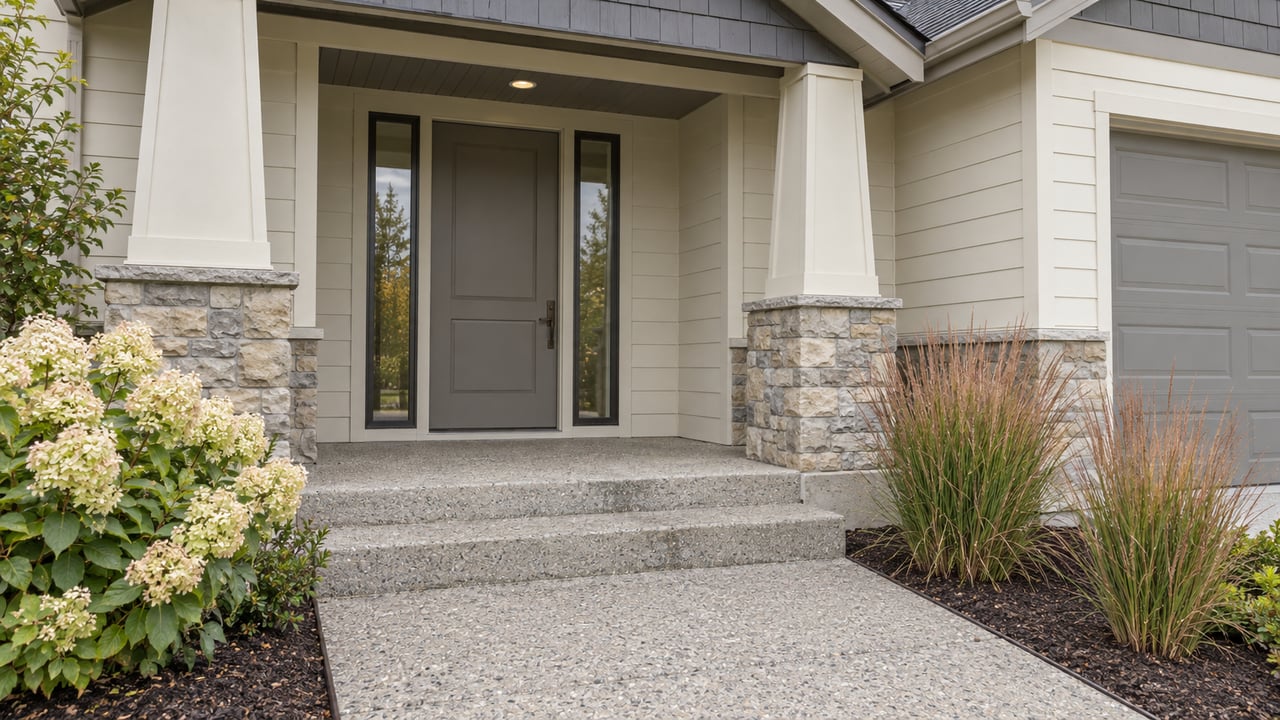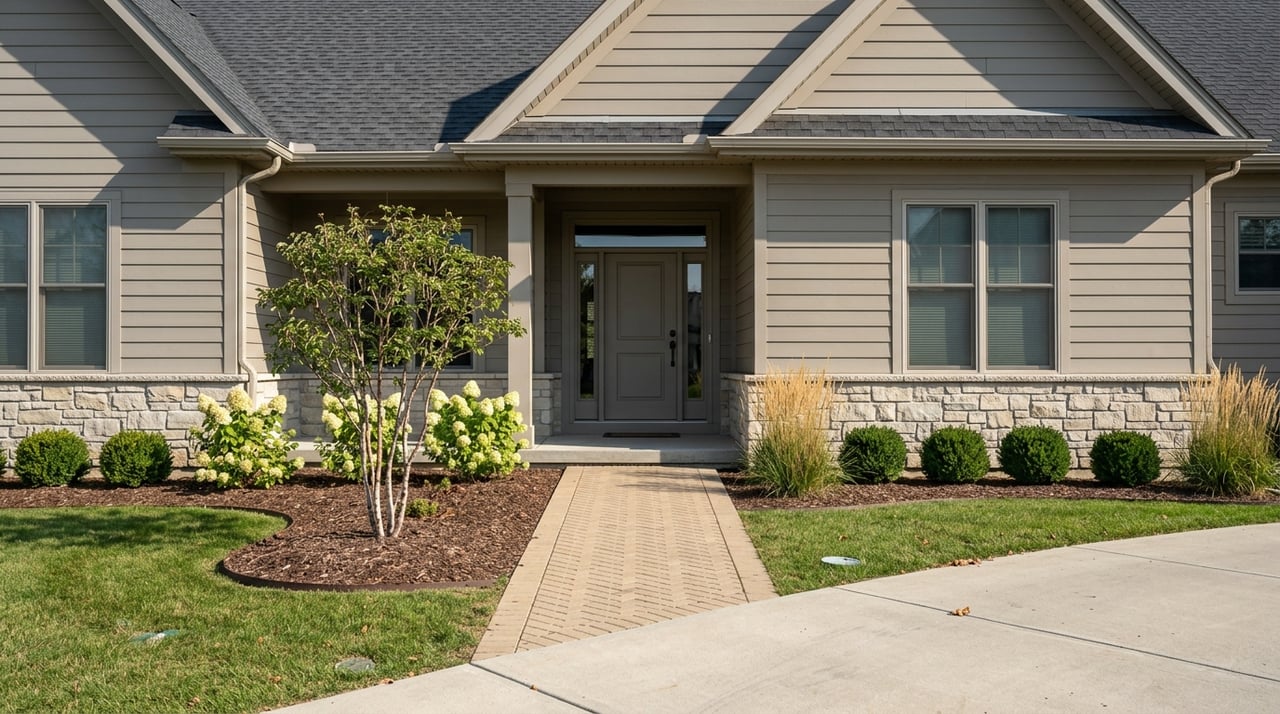
The call usually comes about fourteen months after closing. A buyer moved into a new build northwest of the city, loved the house, budgeted carefully, and then opened an escrow analysis showing a shortage and a payment going up by a few hundred dollars a month. Nothing went wrong. Nobody misled them. Their lender simply escrowed based on the property tax bill that existed at the time, and at that time the county was still taxing a vacant lot.
For a finished home in the high $300s, the first real bill after completion can arrive at a completely different number than the one used to build the escrow account. This is the single most common surprise in new construction across the Omaha metro, and it lands hardest in the places building the fastest. Bennington is one of those places.
The address is doing less work than you think
Here is the fact that reframes everything else. The City of Bennington's certified population sits right around 2,026, according to state figures reported by the Douglas County Post-Gazette. A more recent estimate puts it slightly lower, near 1,958. Meanwhile, roughly 220 homes closed under a Bennington market label in the six months ending in late July 2026.
Those two numbers cannot describe the same place.
Most homes sold as "Bennington" are not inside Bennington city limits. They carry a Bennington mailing address and a Bennington Public Schools assignment while sitting in unincorporated Douglas County, inside a Sanitary and Improvement District.
That distinction is not trivia. It determines who plows the street, who bills for trash, which board sets the levy, and, as the attorneys at Vandenack Weaver lay out, whether the owner is a city resident eligible to vote in municipal elections at all. Two houses can sit two miles apart, share a school assignment and a price point, and land in entirely different taxing districts. The listing photos will not tell you which is which. Neither will the price.
One label, two very different markets
The other thing the price hides is what kind of product you are buying. Metro-wide, the resale market and the new construction market are behaving like separate economies right now, and Bennington's inventory leans heavily toward the second one.
| Segment, year to date through July 2026 | Median closed price | Year over year | Activity signal |
|---|---|---|---|
| Existing homes | $310,000 | Up 3.3% | Closed sales up 3.0%, supply at 1.8 months |
| New construction | $431,494 | Up 2.3% | Closings up 4.3%, but July pendings down 7.9% |
Those Great Plains Regional MLS figures, summarized in the August 20, 2026 Grow Omaha market report, put roughly $121,000 between the two medians. So when a buyer compares Bennington's median close of $389,945 against Omaha's $305,500, a good share of that gap is not location premium. It is the difference between a 2004 ranch and a 2026 spec home with a finished lower level.
The more useful number in that table is the last one. New construction closings are up for the year while July pending sales fell almost 8 percent. That combination describes standing inventory: finished and nearly finished homes carrying into fall without contracts. Builders respond to that with rate buydowns, finished basements, and closing cost credits long before they cut a base price, because a price cut resets the comps for every other home in the section. For a buyer, that is the leverage worth asking about by name.
For context on the resale side, June 2026 brought 1,139 existing home closings across the region at a median of $325,000, with only 1,473 homes on the market and supply down to 1.6 months, per the July 23 Grow Omaha report. Resale in this market is still tight and fast. New construction is where the negotiating room lives.
What the levy is actually paying for
Now put the two ideas together. Bennington-area homes are priced between Omaha proper and the Elkhorn tier, roughly $175,000 below Elkhorn's median close. That gap is the reason value-minded buyers look here. It is also the reason the carrying cost deserves a hard look, because Douglas County's own effective rate data tells a story that runs the other direction: the countywide median effective property tax rate is about 2.11 percent, the lowest in the county shows up in Valley near 1.60 percent, and the highest shows up in Bennington near 2.48 percent.
Run that spread against Bennington's median close and the rough arithmetic is somewhere around $1,400 a year, call it $120 a month, between a Bennington-area rate and a countywide-average one. That is not a quote for any specific address, and it should never be treated as one. It is the size of the variable most buyers never price in.
Three things drive it. The school levy is the largest line on almost any Nebraska tax bill, and Bennington Public Schools levies around 1.4298 percent compared with roughly 1.0661 percent in Bellevue Public Schools. City incorporation status is the second. SID bond debt is the third, and it is the one with the widest range: metro SID levies generally run from about 0.25 percent in older districts that have been paying down bonds for years to about 0.90 percent in brand new ones, which on a $400,000 home is the difference between roughly $1,000 and $3,600 a year. Two new subdivisions in the same school district can differ by $3,000 to $5,000 annually on SID load alone. Every one of those lines is public. The Nebraska Department of Revenue publishes consolidated tax district reports by county, and the Douglas County Assessor's parcel lookup will show the levy breakdown for a specific address before you write an offer.
Inside city limits, that money buys a visible list. Bennington's recent public notices show the city taking sealed bids for the Neumeyer Park Soccer Complex, four natural grass fields plus grading, sidewalks, street and lot parking, irrigation and landscaping, with bids due last Tuesday, August 18. The same notices cover Bennington Road bridge approach slab repairs, sanitary sewer lining work, a supplemental agreement with the Nebraska Department of Transportation for the Big Papio Creek Trail, and Ordinance No. 547 amending the city's Arterial Street Improvement Program fees. Outside city limits, an SID board is funding a narrower version of that same list for one subdivision, and reporting to homeowners rather than to a city council.
The clock that eventually stops
According to Charleston Homes, SID levies are temporary, which is the part buyers rarely hear. In Douglas County, Omaha has historically annexed SID neighborhoods once the bond debt becomes manageable, typically 15 to 25 years after the district forms. When that happens, its levy goes away.
This is where Douglas County and Sarpy County genuinely differ. Nebraska law does not let a metropolitan class city annex property in an adjoining county, a limit written into statute 14-117 and settled in case law decades ago. Papillion or Gretna can annex within Sarpy, but Omaha cannot reach across the county line. A Bennington-area SID sits on the Douglas County side of that rule, which means annexation is a live possibility rather than a theoretical one. Whether that matters to you depends entirely on how many years you plan to own, and on how many years of bond payments the district has left. Both are knowable before closing. Neither shows up on a listing.
Five questions worth asking before the offer
- Is this address inside Bennington city limits, in an SID, or on Omaha-annexed ground? Get the answer in writing, not from the mailing address.
- If it is an SID, what is the district number, and when were the bonds issued?
- What was the January 1 assessed value, and does it reflect a finished home or a lot?
- Has the lender escrowed using the full assessed value with improvements complete, or the current bill?
- On new construction sitting unsold into fall, what is the builder offering that is not a price reduction?
Why timelines slip here, and what that tells you
One last piece of evidence for the same thesis. According to 3 News Now, The Haven at Bennington, a four story mixed use building downtown with retail space and 12 apartments from developer Joshuwa Hannum, won city council approval for tax increment financing and had the mayor's public backing. Then it lost a full year to utility relocation with OPPD and CenturyLink, and as of reporting in May 2026 it was still waiting on Cox Communications to move a line before an 18 month build could begin. Separately, the city has been working through zoning and redevelopment approvals for the Prairie Ridge subdivision, with plat and overlay details posted on the city's site.
In a growing town, infrastructure timing sets the pace, not demand. That is true of a downtown building, and it is true of the street in front of the house you are considering. The financing mechanism behind that street is the thing that shows up on your tax bill every year you own it.
Questions we get
Why do different sites show Bennington medians hundreds of dollars apart? Because they are measuring different populations. Listing-based medians in the low $400s reflect what is sitting unsold, which skews new. The closings-based median of $389,945 reflects what actually traded. The gap between them is itself the argument against relying on any single median here.
Does a higher levy mean a worse buy? Not on its own. It depends on what the levy funds, how many bond years remain, and how long you intend to own. A newer district with new streets and a long bond schedule is a different math problem than one eight years from payoff.
If you are comparing a Bennington address against Elkhorn, Papillion, or Gretna, the price is the easy part. Let's pull the taxing district, the levy breakdown, and the assessment history on the specific homes you are considering, then talk about what your real monthly number looks like. Reach out to Sheila Ost to start your move with a free consultation and home valuation.
This article is general information, not legal, tax or financial advice. Consult a qualified professional about your situation.